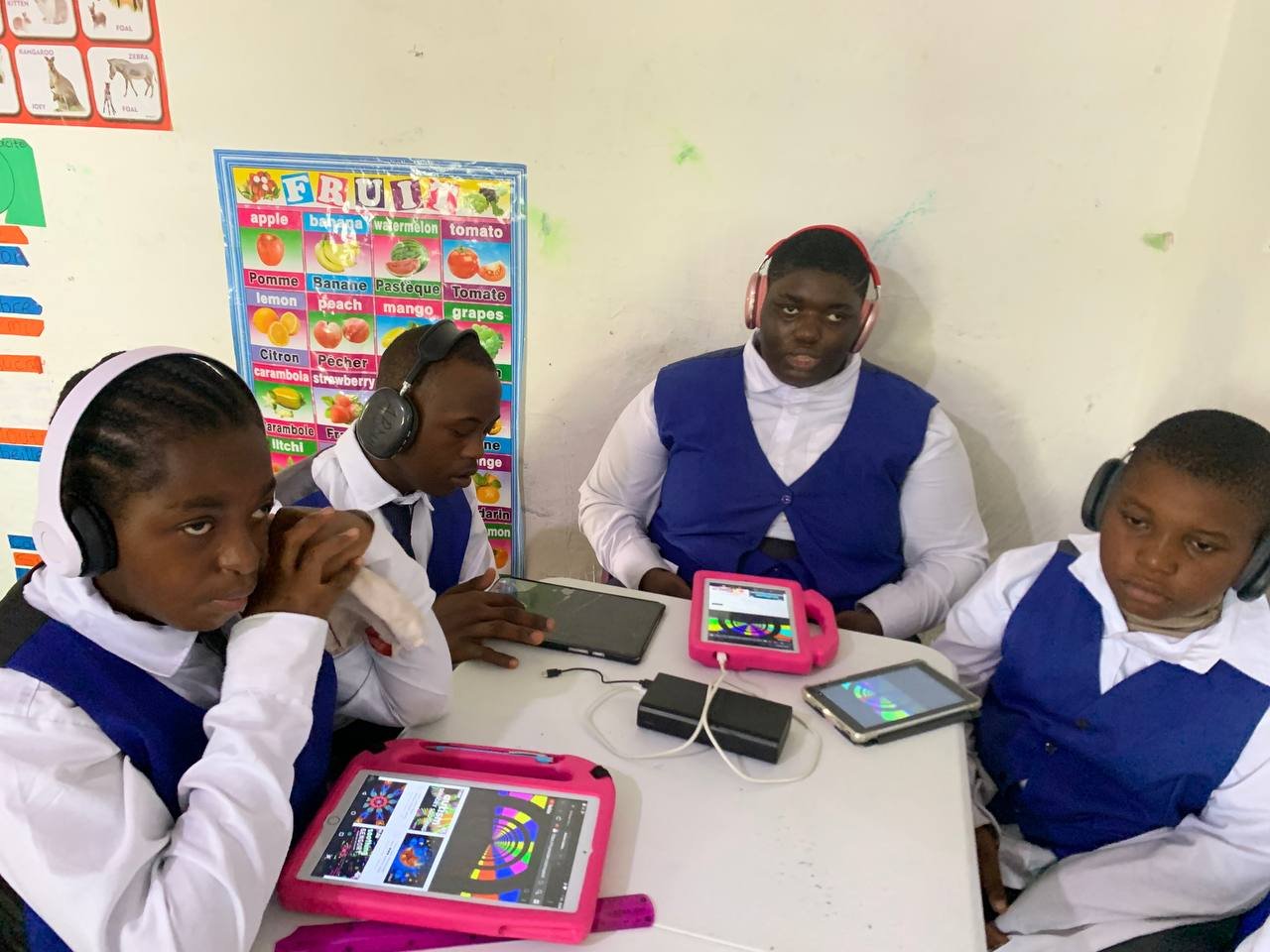
Imagine being unable to communicate what you feel, what you need, what you dream. For millions of children with physical, cognitive, or sensory differences, this has long been an everyday reality. Adaptive technology is changing that — not by changing the child, but by changing the tools we put in their hands.
From touchscreen devices that respond to eye movements, to AI-powered speech synthesisers that give non-verbal children a voice for the first time, the landscape of assistive technology has undergone a quiet revolution. And at the heart of it is a simple, radical idea: every learner is capable of more than our traditional systems have allowed them to show.
This article explores the most impactful adaptive technologies available today, the science behind why they work, and how educators and families can begin integrating them into daily life and learning environments.
1 in 6
children globally lives with a developmental disability
73%
of children with disabilities report improved learning outcomes with assistive tech
$26B
global assistive technology market projected by 2030
What Is Adaptive Technology?
Adaptive technology — sometimes called assistive technology (AT) — refers to any device, software, or system that helps a person with a disability perform tasks that might otherwise be difficult or impossible. The spectrum is enormous: it ranges from low-tech solutions like pencil grips and large-print books, to sophisticated eye-tracking systems, brain-computer interfaces, and AI-driven communication apps.
The term “adaptive” is deliberate. These tools don’t demand that children conform to a single mode of learning or interaction. Instead, they adapt to each child’s unique profile — their strengths, limitations, preferred senses, and pace of development.
Crucially, adaptive technology is not a crutch. Research consistently shows that when children use tools tailored to their needs, their confidence, engagement, and academic achievement all increase — often dramatically.
“The right technology doesn’t replace a child’s effort. It removes the barrier between their effort and its expression.”Dr. Priya Venkataramaiah, Pediatric Occupational Therapist
The Technologies Making the Greatest Difference
Across classrooms, therapy centres, and homes around the world, a handful of technologies are consistently proving their worth. Here is a closer look at the tools that are transforming lives right now.
🗣️
Augmentative & Alternative Communication (AAC)
AAC devices — from simple picture boards to sophisticated speech-generating tablets — give non-verbal children a way to express themselves. Apps like Proloquo2Go and TouchChat use symbol grids tailored to each child’s vocabulary and motor abilities.
👁️
Eye-Tracking Technology
For children with cerebral palsy, ALS, or severe motor impairments, eye-tracking systems allow full computer control using only gaze. Tobii Dynavox devices have enabled children who cannot use their hands to write, paint, and even code for the first time.
🧠
AI-Powered Learning Platforms
Platforms like Snap&Read and Co:Writer use machine learning to adapt to a learner’s reading level in real time — highlighting text, simplifying vocabulary, and predicting words before they’re typed. Ideal for children with dyslexia, ADHD, or processing differences.
🎧
Sensory Regulation Tools
Noise-cancelling headphones, weighted blankets with biofeedback sensors, and calming apps that respond to a child’s physiological stress signals help children with autism or sensory processing disorder regulate their environment — a prerequisite for effective learning.
🤖
Social Robots & Companion AI
Robots like NAO and Kaspar have demonstrated remarkable success in helping autistic children practice social interaction in a low-pressure, predictable environment. Unlike humans, robots don’t display unpredictable micro-expressions or emotional complexity.
🕶️
Immersive & Virtual Reality
VR is being used to simulate real-world environments for children with anxiety or autism — practising a school day, a medical appointment, or a social situation before it happens in real life. Studies show significant reduction in anticipatory anxiety with regular VR exposure.
Why It Works: The Science of Multimodal Learning
The effectiveness of adaptive technology is grounded in well-established learning science. Traditional classroom environments are overwhelmingly designed for a single mode: auditory and text-based instruction. For children whose brains process information differently — whether due to autism, ADHD, dyslexia, cerebral palsy, or other conditions — this single channel is a bottleneck, not a pathway.
Universal Design for Learning (UDL), a framework developed at CAST (Center for Applied Special Technology), argues that the most effective learning environments offer multiple means of representation, expression, and engagement. Adaptive technology is, in many ways, UDL made tangible: it gives children access to information through whichever channels work best for them, and allows them to demonstrate understanding in ways that suit their abilities.
Neuroscience adds another layer. Children who consistently fail to communicate or participate tend to develop what psychologists call “learned helplessness” — a state in which they stop attempting tasks because they expect to fail. When adaptive technology removes that ceiling, children don’t just gain a skill. They regain agency. And agency, research suggests, is one of the most powerful predictors of long-term learning success.
Research Spotlight
A 2024 meta-analysis published in the Journal of Special Education Technology found that students with disabilities who used AT consistently over 12 months showed an average 31% improvement in academic task completion — and a 44% increase in willingness to attempt new challenges.
Autism Spectrum & Communication Technologies
Autism spectrum disorder (ASD) presents a particularly wide range of communication and sensory needs, which makes adaptive technology both challenging to implement and, when done well, remarkably effective.
For children who are non-speaking or minimally verbal — estimated at around 25 to 30 percent of those on the spectrum — AAC devices can be genuinely life-changing. The research is consistent: early introduction of AAC does not suppress spoken language development. In fact, most studies show it supports speech emergence by reducing communication frustration.
Beyond communication, visual scheduling apps like First Then Visual Schedule and Choiceworks have helped thousands of autistic children navigate transitions and routines independently — reducing meltdowns and increasing daily autonomy.
Dyslexia, ADHD & Reading Technologies
For children with dyslexia, the written word can feel like a locked door. Text-to-speech tools have existed for decades, but modern iterations are far more sophisticated. Apps like Natural Reader use neural text-to-speech voices that sound genuinely human, reducing the stigma children often feel when using assistive tools.
For children with ADHD, executive function challenges — planning, task-initiation, working memory — are often more disabling than focus itself. Tools like Focus@Will use neuroscience-backed audio channels that support sustained attention, while apps like Tiimo provide visual time-management support that externalises the internal clock that many ADHD brains struggle to maintain.
“When Marcus started using his AAC device at age four, the first thing he said was ‘I love you, Mama.’ She had waited three years to hear it.”Inclusive Classroom Case Study, Kenya, 2025
Physical & Motor Disabilities
Children with physical disabilities such as spina bifida, muscular dystrophy, or spinal cord injuries face distinct challenges in interacting with standard educational materials. Switch access technology — which allows a single movement, breath, or eye blink to control a device — has opened computing access to children with even the most severe physical limitations.
3D printing is adding another dimension. Schools and OT clinics are now printing custom adaptive tools — modified pencil grips, stabilised keyboard supports, bespoke game controllers — at a fraction of the cost of commercial alternatives, and tailored precisely to a child’s hand anatomy and motor range.
Practical Steps for Families & Educators
Knowing the technology exists and knowing how to access it are two different challenges. Here are the most important steps to take when considering adaptive technology for a child in your care.
- 1Start with a needs assessment. Work with an occupational therapist, speech-language pathologist, or assistive technology specialist to identify the specific barriers the child faces. Technology chosen without assessment often goes unused.
- 2Trial before you buy. Many AT devices are expensive. Most manufacturers offer trial programmes, and AT lending libraries — often through government disability services or universities — allow families to test devices before committing.
- 3Involve the child. Children who have agency in choosing their tools use them more consistently and with greater enthusiasm. Even young children can express preferences when given adapted choices.
- 4Train everyone, not just the child. Teachers, teaching assistants, and family members all need training. An AAC device that teachers don’t know how to model is a device that will sit unused in a drawer.
- 5Advocate for funding and policy support. In many countries, assistive technology is covered by national disability schemes or education entitlements. Know what your child is legally entitled to and don’t be afraid to ask.
- 6Review and adapt regularly. A child grows. Their needs evolve. What works at five may not work at ten. Build a review cycle — at least annually — into any AT plan.
The Road Ahead
We are at an extraordinary inflection point. The convergence of artificial intelligence, miniaturised hardware, and vastly improved natural-language processing is producing a new generation of adaptive tools that would have seemed like science fiction a decade ago. Brain-computer interface technology, while still in early stages, is already enabling paralysed individuals to type using thought alone. The implications for children with profound physical disabilities are staggering.
More immediately, the falling cost of tablets, the expansion of app-based AT solutions, and the growing movement toward inclusive classrooms mean that adaptive technology is reaching more children in more parts of the world than ever before — including in low- and middle-income countries where specialist services have historically been absent.
But technology, however brilliant, is never the whole answer. It must be accompanied by trained educators, supportive families, accessible funding, and — above all — a cultural shift in how we understand childhood ability. The goal is not to make children with special needs “more normal.” It is to make our systems more able to see, include, and celebrate who they already are.