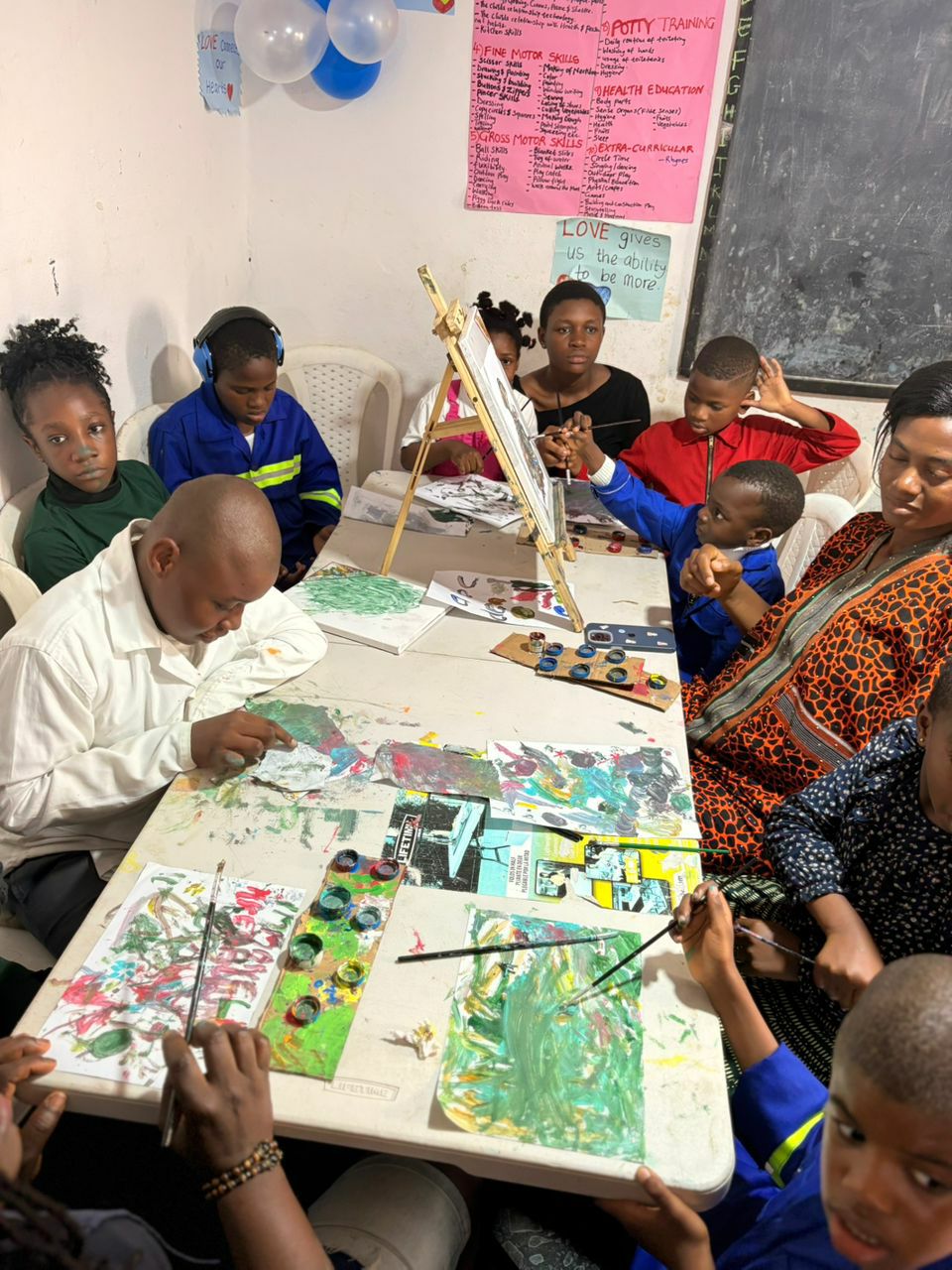
Inside the craft table — where paint, beads, and clay are quietly doing the work of therapy
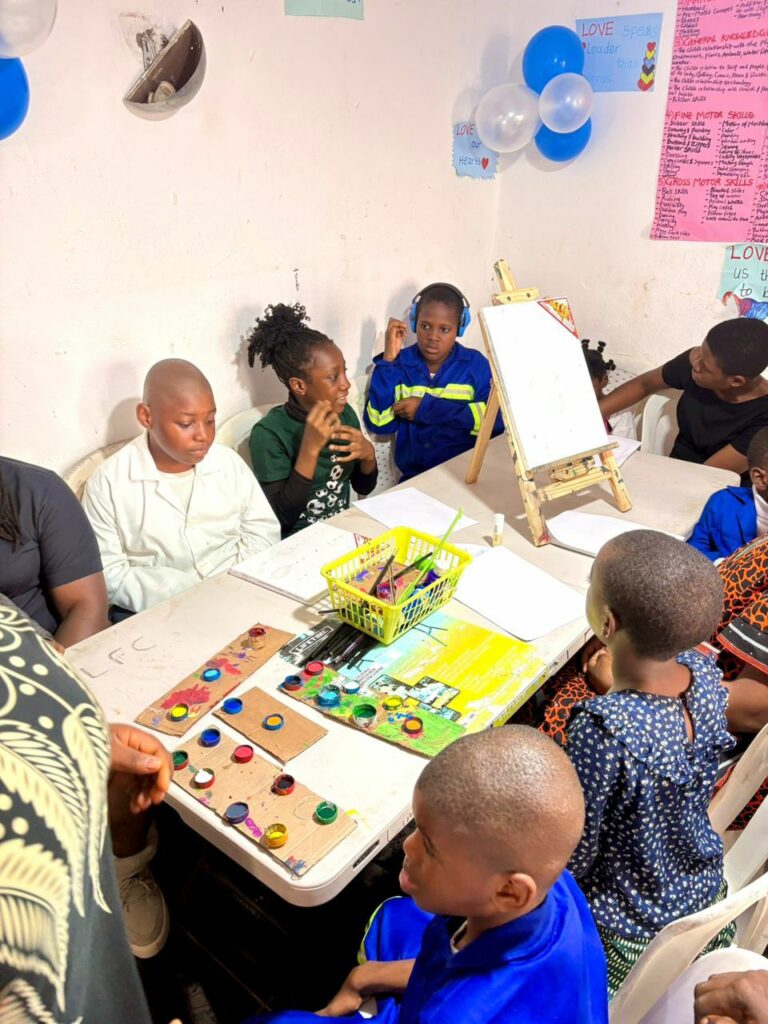
Watch a child with autism sit down at a craft table. Watch them reach for a bead, position it carefully between two fingers, and guide it onto a string. Watch them do it again. And again.
You might see repetition. A therapist sees rehabilitation.
What happens at a craft table is rarely as simple as it looks. For children on the autism spectrum, the act of creating — threading beads, mixing colors, molding clay, cutting shapes — is not a break from developmental work. In many cases, it is the developmental work. And the skills being built in those quiet, focused minutes have a way of showing up later, in the most important places: at the breakfast table, in the classroom, in a conversation, in a life lived with greater independence and dignity.
This is what the science — and the practitioners who work with autistic children every day — have come to understand. The craft table is not a distraction from progress. It is one of its most reliable addresses.
The Grip That Changes Everything
Let’s start small. Specifically, with two fingers.
The pincer grasp — the coordinated use of the thumb and index finger to pick up and manipulate small objects — is a developmental milestone that many children with autism reach later than their peers, or struggle with significantly. It is also one of the most consequential motor skills a child can develop, because it underlies an enormous range of daily tasks: buttoning a shirt, pulling up a zipper, holding a spoon, turning a page, eventually gripping a pen.
Picking up a small bead and placing it precisely onto a string is, in mechanical terms, a perfect exercise for this grip. Done repeatedly, across weeks and months, it builds the hand strength, coordination, and neuromuscular control that occupational therapists often spend dedicated sessions trying to develop.
The bead is a tool. The bracelet at the end is a side effect.
When the World Feels Like Too Much
Sensory processing is one of the most widely recognized and least widely understood aspects of autism. For many autistic children, the everyday world arrives at an intensity that is genuinely difficult to manage — sounds that feel piercing, textures that feel unbearable, environments that feel chaotic. The nervous system, rather than filtering sensory input in the background, is flooded by it.
Arts and crafts offer something that is surprisingly difficult to find: a sensory environment the child can control.
The child chooses what to touch and for how long. They can press their fingers into cool clay, or drag a brush across smooth paper, or roll a bead back and forth in their palm. Each of these tactile experiences sends information to the brain — information that, repeated over time, helps the nervous system learn to process touch more efficiently. This is the foundation of sensory integration therapy, and creative activity delivers it naturally, without clinical sterility, in a context the child finds engaging.
There is something else, too. The repetitive motion of beading — pick up, thread, slide, repeat — has a rhythmic quality that many autistic children find genuinely calming. It is not unlike the effect of rocking, humming, or other self-regulatory behaviors. For a nervous system under pressure, rhythm is steadying. A beading session can lower anxiety and improve focus in ways that carry into the rest of the day.
The Logic in the Pattern
“Red bead. Blue bead. Red bead. Blue bead.”
Behind this simple instruction lies a cognitive workout. To follow a color pattern, a child must hold a rule in working memory, recognize where they are in a sequence, apply the next step correctly, notice when they’ve made an error, and self-correct. Repeat this across a full bracelet and you have exercised, in a hands-on and motivating context, a cluster of cognitive abilities that researchers group under the term executive functioning.
Executive functioning — the brain’s capacity to plan, organize, initiate, and monitor a task — is frequently an area of genuine difficulty for autistic children. Difficulties here show up as trouble following multi-step instructions, transitioning between activities, or starting and completing tasks. These are challenges that can significantly affect academic performance, daily routines, and independence.
Pattern-making through crafts builds these exact capacities, step by step, bead by bead. It teaches, in the most concrete possible terms, that actions have sequences, that sequences have logic, and that following through from beginning to end produces something real and worth finishing.
When Art Becomes Language
For families of non-verbal or minimally verbal autistic children, communication is a landscape of enormous complexity and profound love. The wait for spoken language — and the uncertainty of whether it will come, and when — is one of the most quietly painful experiences in autism parenting.
Art does not wait.
When a child reaches for the black paint on a difficult afternoon, or chooses only yellow on a morning they seem bright and settled, they are communicating something real about their interior world. When they draw the same figure repeatedly, or arrange beads in a personal pattern that has nothing to do with the instructions given — they are expressing preference, habit, identity.
For autistic children who do not yet have words, or who find verbal expression difficult and exhausting, art functions as expressive language: a legitimate, accessible way to say this is who I am, this is what I notice, this is what I feel. Supporting this form of expression is not a workaround while waiting for speech to develop. It is a recognition that communication itself takes many forms, and all of them matter.
A painting is not a consolation. It is a voice.
The Finish Line and What It Builds
Autistic children often move through systems — educational, social, therapeutic — in which they are regularly reminded of what they have not yet achieved. The cumulative weight of that experience shapes how a child understands themselves: their capabilities, their potential, their right to expect success.
Completing a piece of art interrupts that pattern.
There is no wrong way to paint a picture. There is no failed bracelet. And when a child holds up something they made — something that exists now because of their hands and their choices and their persistence — the effect on self-perception is measurable and real. Occupational therapists and developmental psychologists have documented the relationship between task completion and self-efficacy: the belief that effort produces outcomes and that one’s abilities are genuine.
That belief, once established at the craft table, does not stay there. It travels. It shows up when a social situation feels difficult and the child tries anyway. It shows up when an academic task seems impossible and the child begins. It shows up across the full arc of a life that autism does not diminish — only shapes differently.
What a Craft Table Actually Is
For autistic children, the craft table is a place where fine motor skills are rehearsed, sensory systems are trained, cognition is stretched, communication happens without pressure, and confidence is built on the solid ground of finished things.
It looks like play. It functions like therapy. And for the children sitting there, paint on their hands and beads in front of them, it is something more than either: it is practice for independence.
Arts-based interventions for autistic children are most effective when integrated with professional occupational therapy and special education support. If your child is on the autism spectrum, a qualified occupational therapist can help identify the activities that best match their sensory profile and developmental goals.